
Take a look around the next time you're at a coffee shop, an airport, or even your own living room. Someone is looking at a phone. Another person is working on a laptop. Kids are watching videos on a tablet. Someone else is scrolling through social media.
Technology has become part of everyday life, and for most of us, that's not changing anytime soon. But there's one habit that often comes with all that screen time: looking down.
You've probably heard the term "tech neck," but is it actually a real thing? The answer is yes, although it isn't caused by your phone alone. It's usually the result of spending long periods in the same position, especially with your head tilted forward. Over time, that posture can place extra stress on the muscles and joints of your neck, shoulders, and upper back.
Your head weighs about 10 to 12 pounds. When your ears are positioned over your shoulders, your body is designed to support that weight efficiently. But as your head moves farther forward, the muscles in your neck and upper back have to work much harder to hold it there.
That's why prolonged screen time can leave you feeling:
The issue isn't that you glanced at your phone. It's that you may have spent the last two hours in the same position without realizing it.
Adults aren't the only ones spending more time on screens. Many students move from classroom desks to homework on laptops, then relax with a phone, gaming system, or tablet before bed. Add in sports, backpacks, and long periods of sitting, and growing bodies are adapting to a lot throughout the school year. The goal isn't to eliminate technology. It's to build healthy habits around its use.
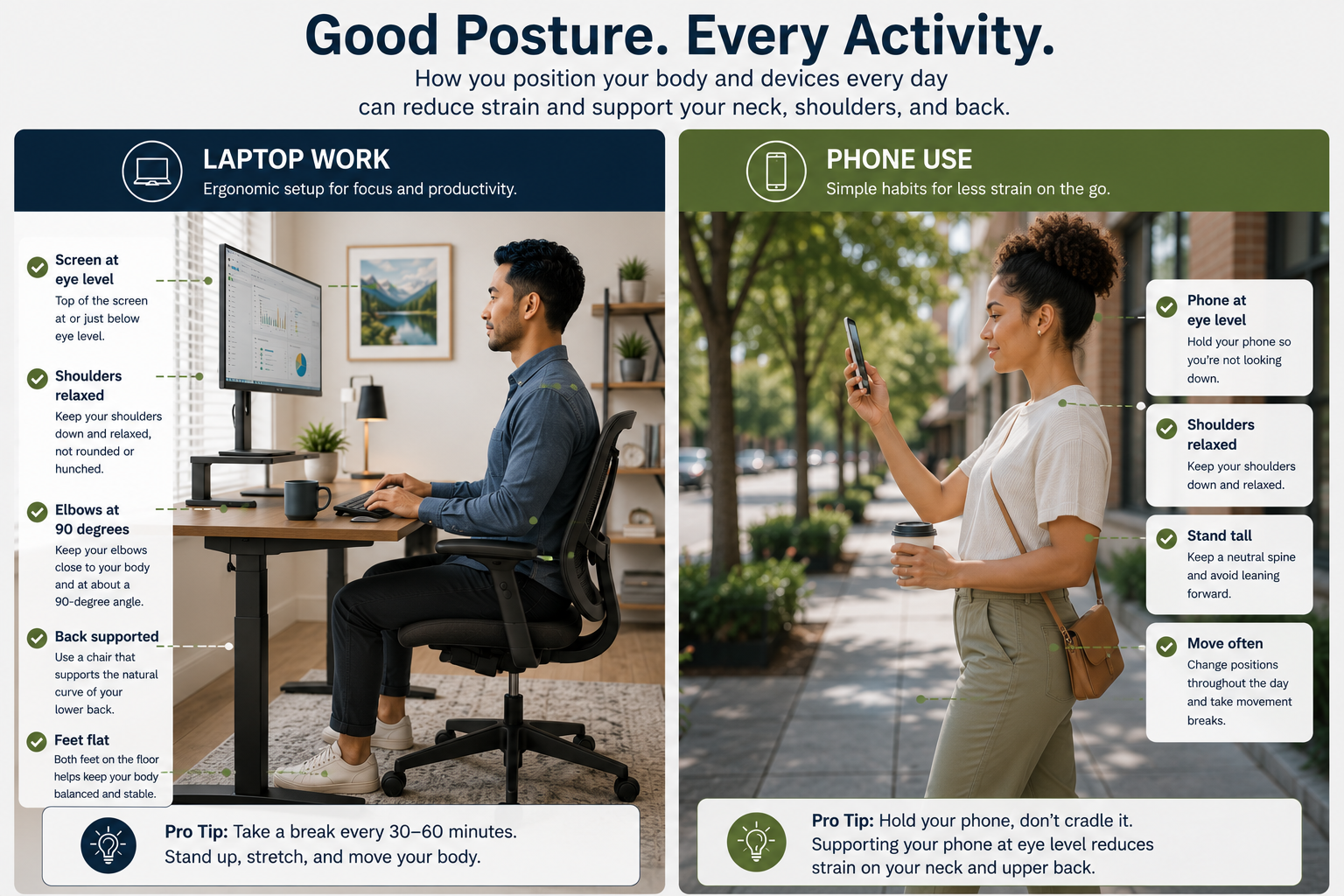
Fortunately, preventing "tech neck" doesn't require giving up your favorite devices. A few simple habits can help reduce unnecessary strain:
Whether you're working at a desk, helping with homework, or scrolling through your phone after dinner, regular movement helps your muscles and joints reset throughout the day. Sometimes the best thing you can do for your posture is simply get up and take a short walk.
Many people assume neck pain, headaches, or stiff shoulders are just part of modern life. They don't have to be. Paying attention to your posture, building healthier habits, and addressing small concerns before they become bigger ones can help you feel better today while supporting your long-term health.
Whether you're spending your day at a desk, helping your kids with homework, or trying to limit the effects of screen time on your family, Point Chiropractic is here to help. Schedule an appointment today and learn how proactive chiropractic care can support healthy posture, movement, and nervous system function for every stage of life.


.png)